Guides
From Drawing to Chandelier: What 45 Days of Production Actually Looks Like
Metal, glass, wiring, trial assembly and packing — photographed step by step on a current production run. What a 35–45 day lead time contains, and what you receive before the crate ships.
Everything starts with the drawing
A custom chandelier begins as a file, not as a fixture: a section drawing, a ceiling plan, or sometimes just a reference photo and a room height. Before any metal is cut, the drawing is checked for the things that only matter on site — total drop height against ceiling height, suspension points against the slab, glass quantities against the composition. When something cannot work as drawn, it is flagged and quoted with the correction, not silently changed.
The approved drawing then becomes a parts list: canopies, stems, frames, lamp holders, cable — and the glass itself.
Metal first: canopies, stems and frames
Metal parts are prepared first because everything else hangs from them. Ceiling canopies are drilled at their suspension points, stems are cut to the drop heights on the drawing, and mounting discs are matched to each canopy before anything goes to finishing.
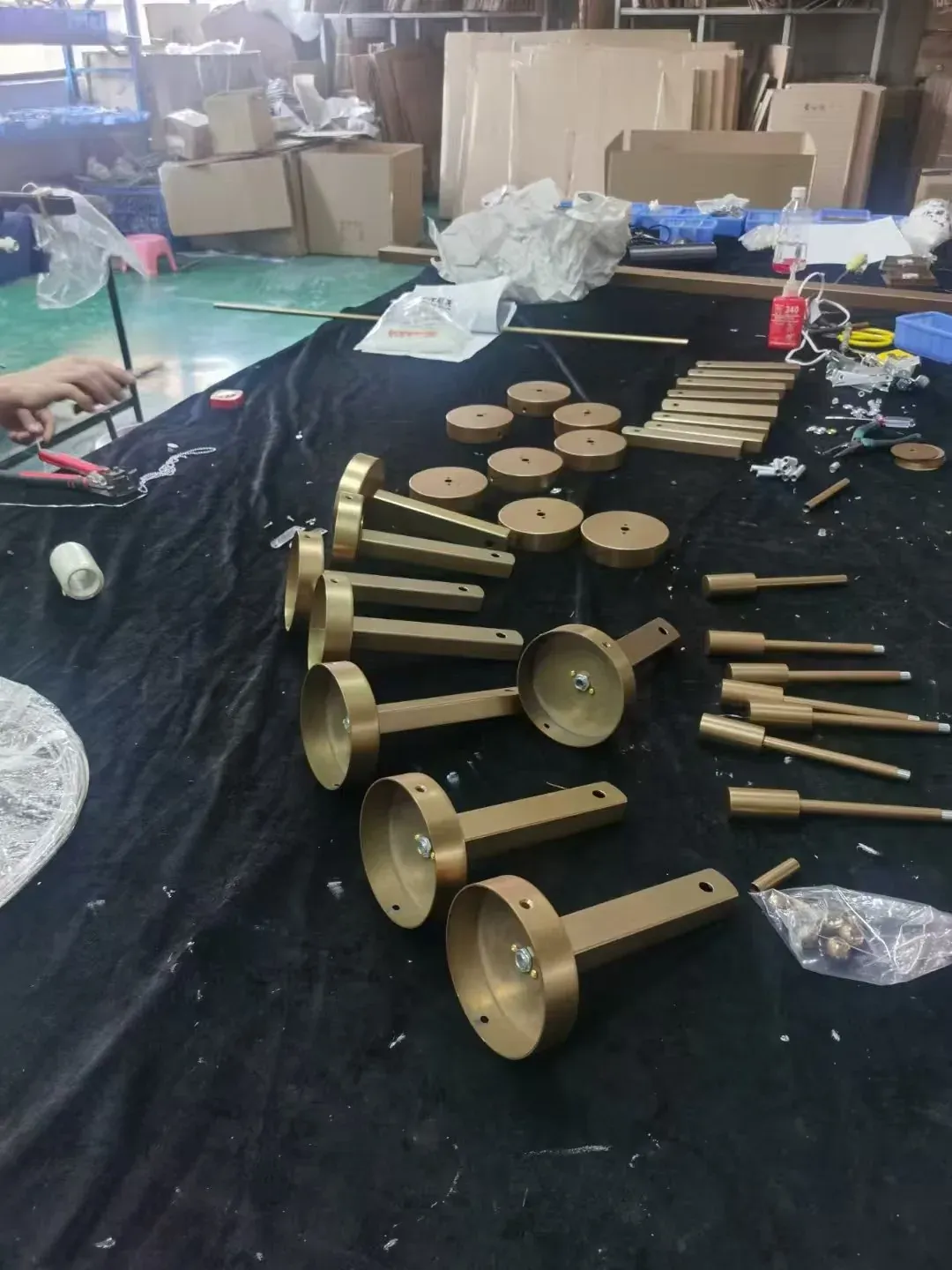
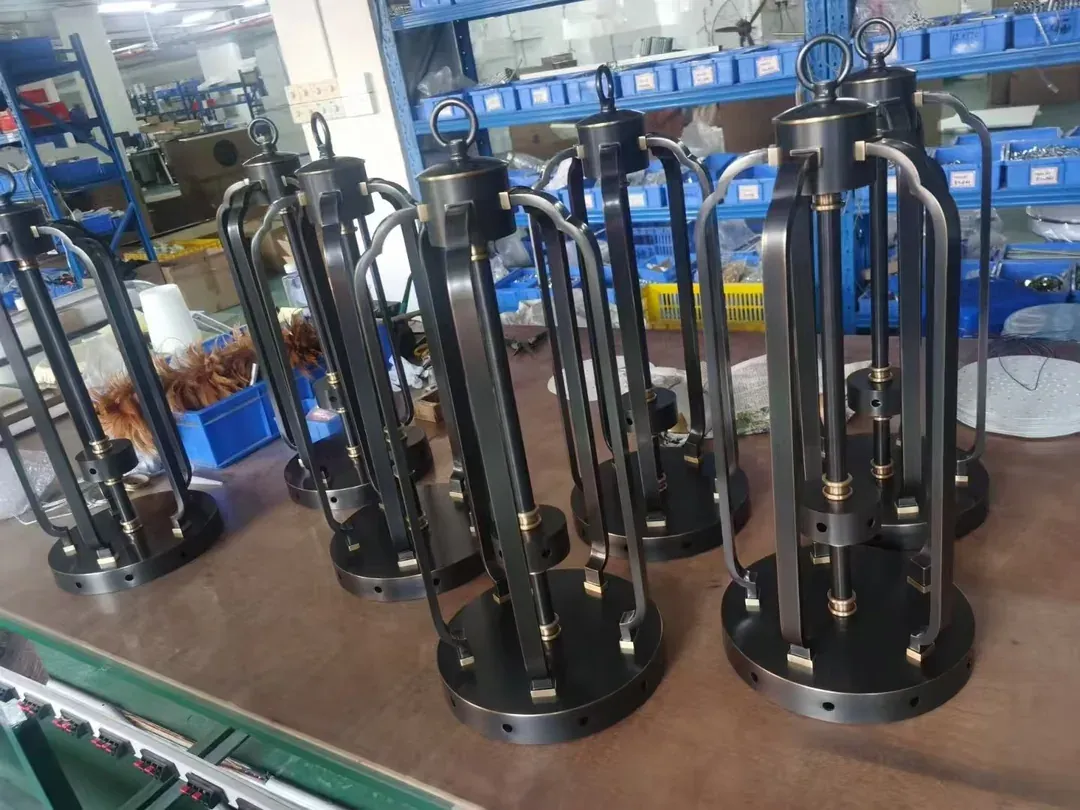
Frames for lantern-style fixtures go through the same routine — rings, rods and detail plates fitted and checked one by one. A frame that is even slightly out of square will show once the glass is on, so it is corrected at the bench, not on site.
Glass arrives from the blowers — and gets checked
Hand-blown shades arrive from the glass workshops nearby. The workshop sits in Henglan Town, Zhongshan — about thirty minutes from the Guzhen lighting belt where most of those studios operate, which is why special glass can be sourced without long detours.
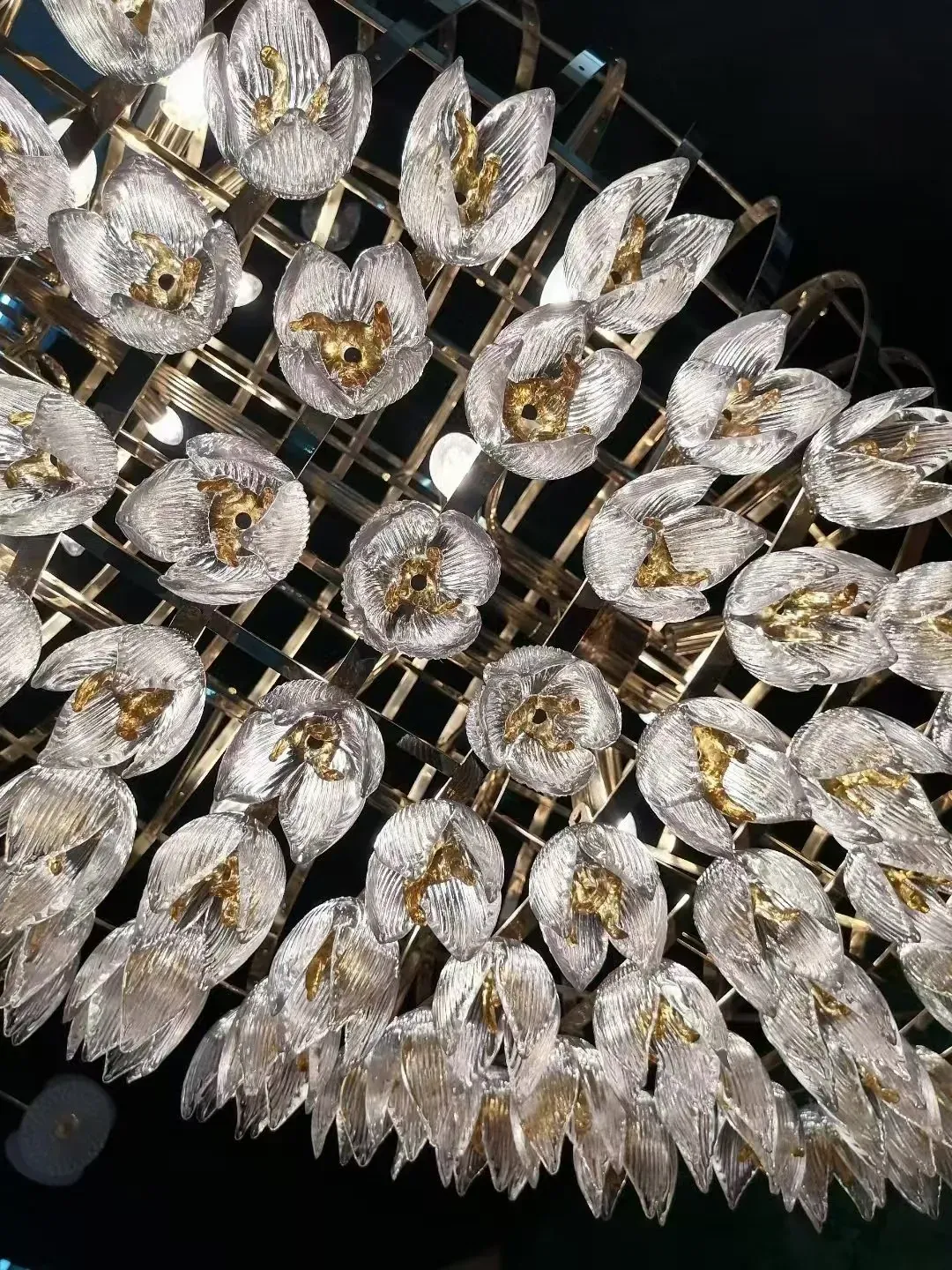
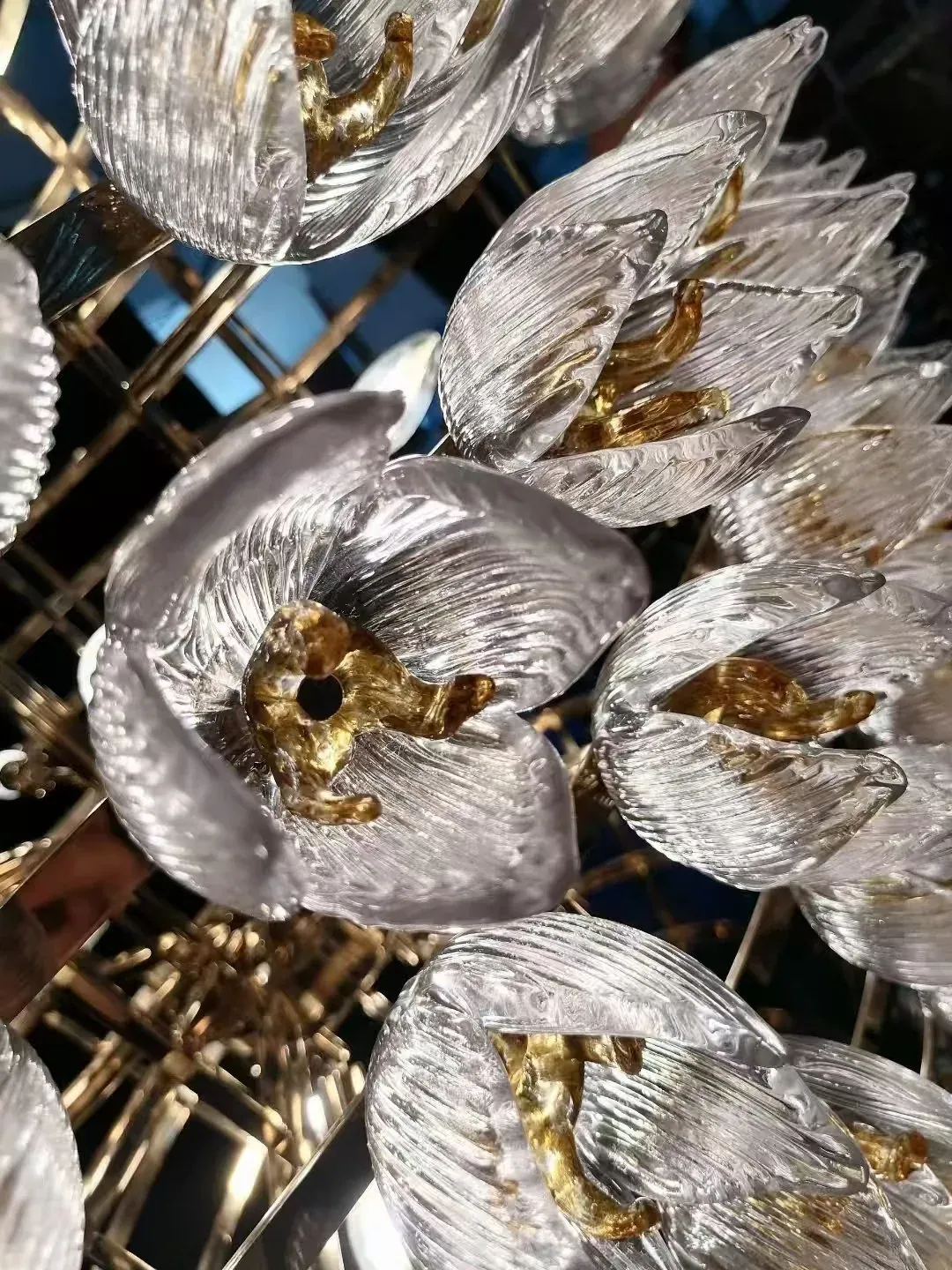
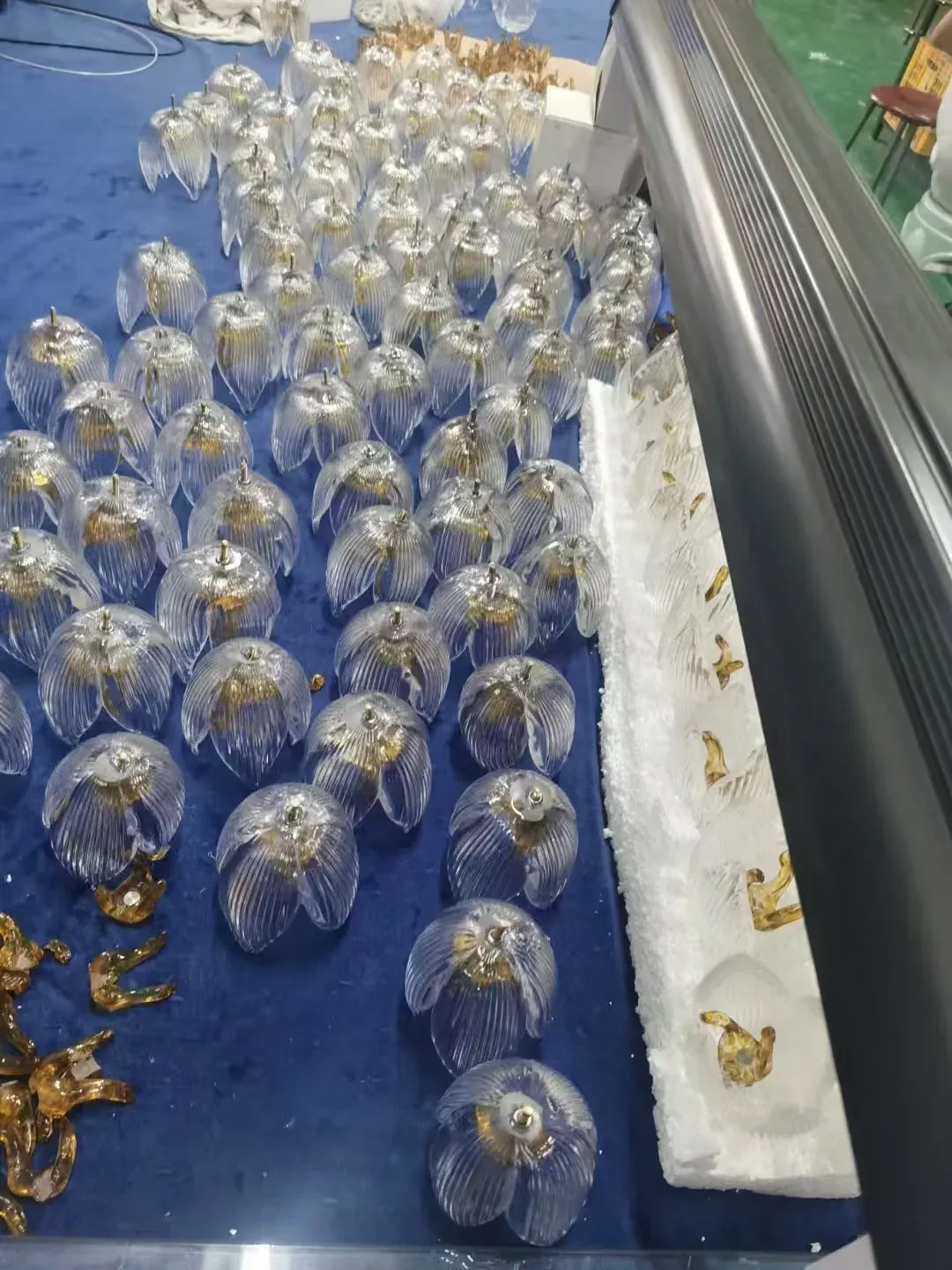
Each delivery is laid out, counted against the composition and inspected: seams, rib consistency, and the fit of the brass adapter on every shade.
The detail is worth zooming in on. The amber centre inside each shade is part of the glass itself — blown in, not coated on. No two hand-blown pieces are identical, and for a custom hotel fixture that is a feature, not a defect.
Wiring: sockets, cable and continuity
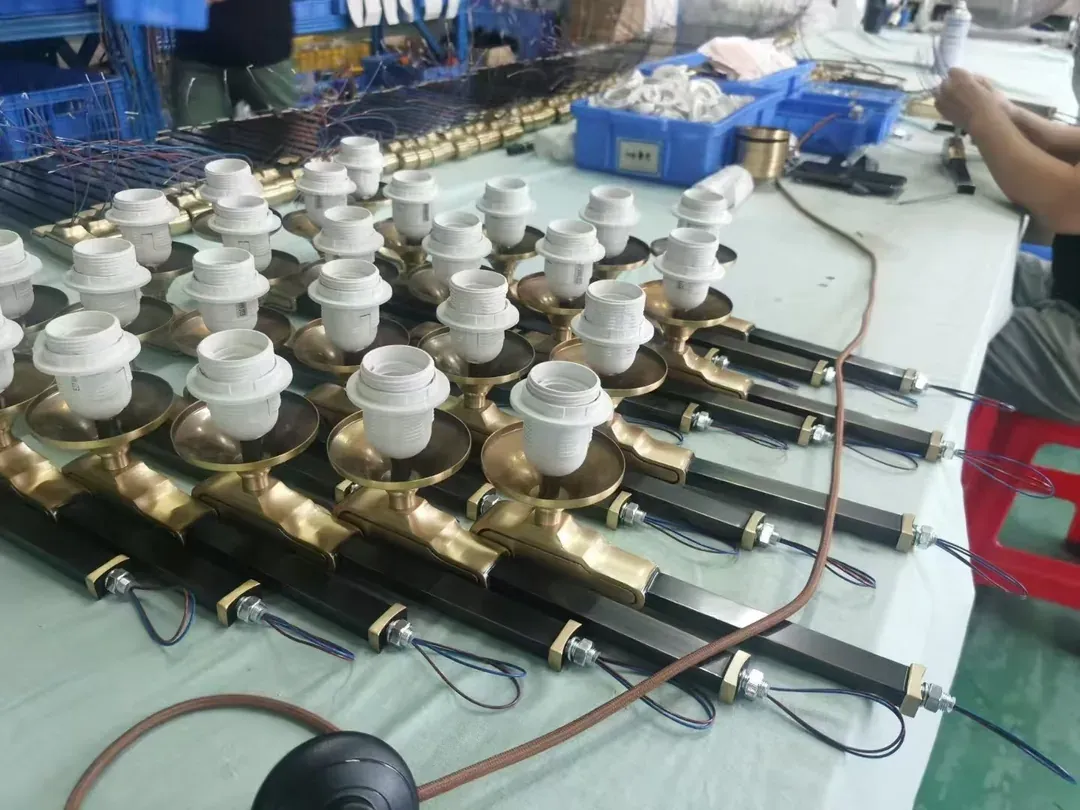
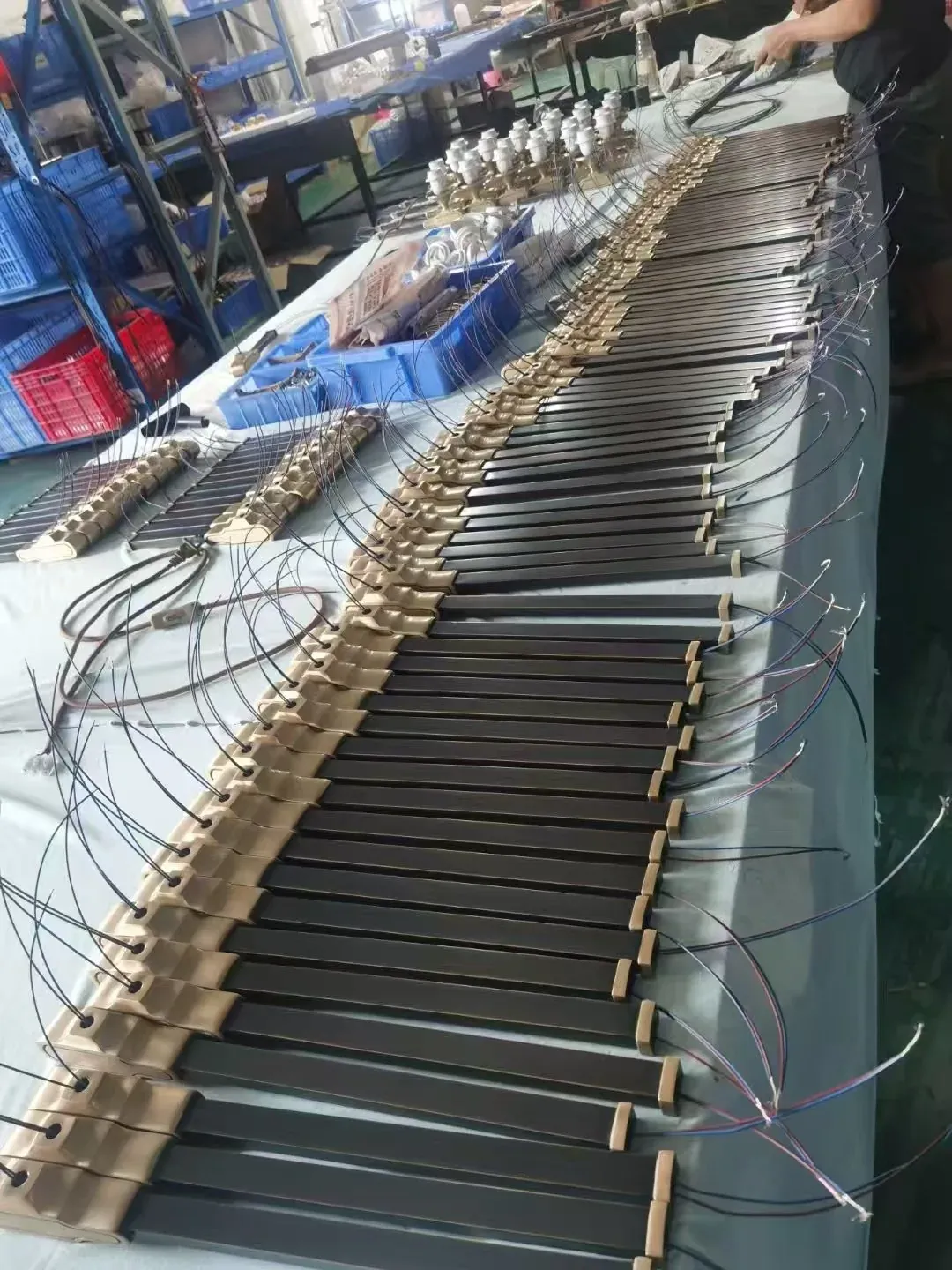
Lamp holders are wired onto the arms before assembly. Every cable is routed and secured so nothing stays visible once the fixture is complete, and the wiring specification follows the destination market of the project.
For a large composition this is staged work: arms are wired in batches, staged in rows and counted against the parts list before anything is fitted to the frame.
Trial assembly: the first time it looks like a chandelier
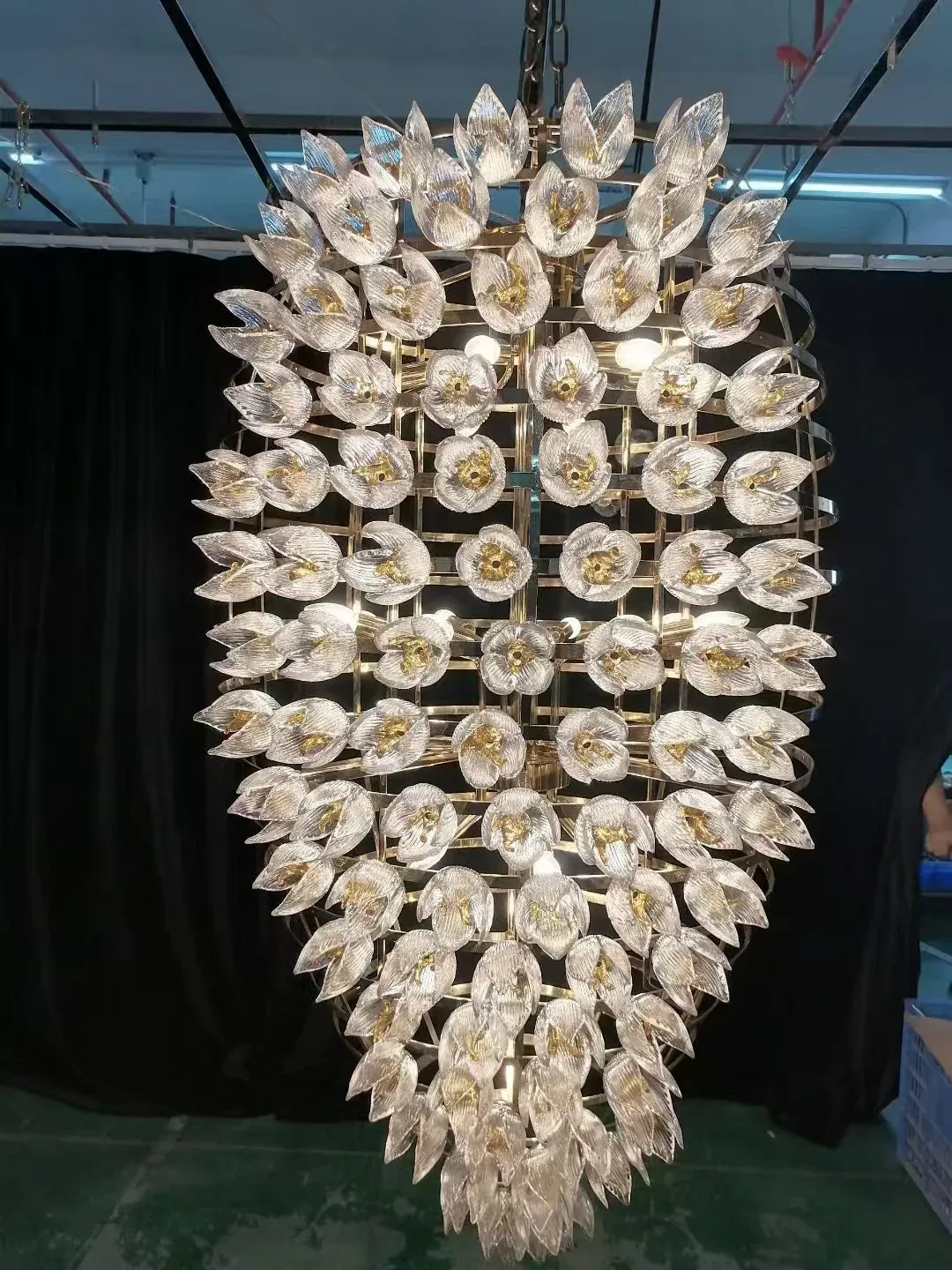
Before final packing, the composition is trial-assembled — shades mounted onto the frame cluster by cluster so balance, spacing and the light effect can be judged as a whole. This is the stage where a composition is still cheap to adjust: a cluster moved, a drop shortened, a colour swapped. On site, none of those changes are cheap.
Packing for the journey
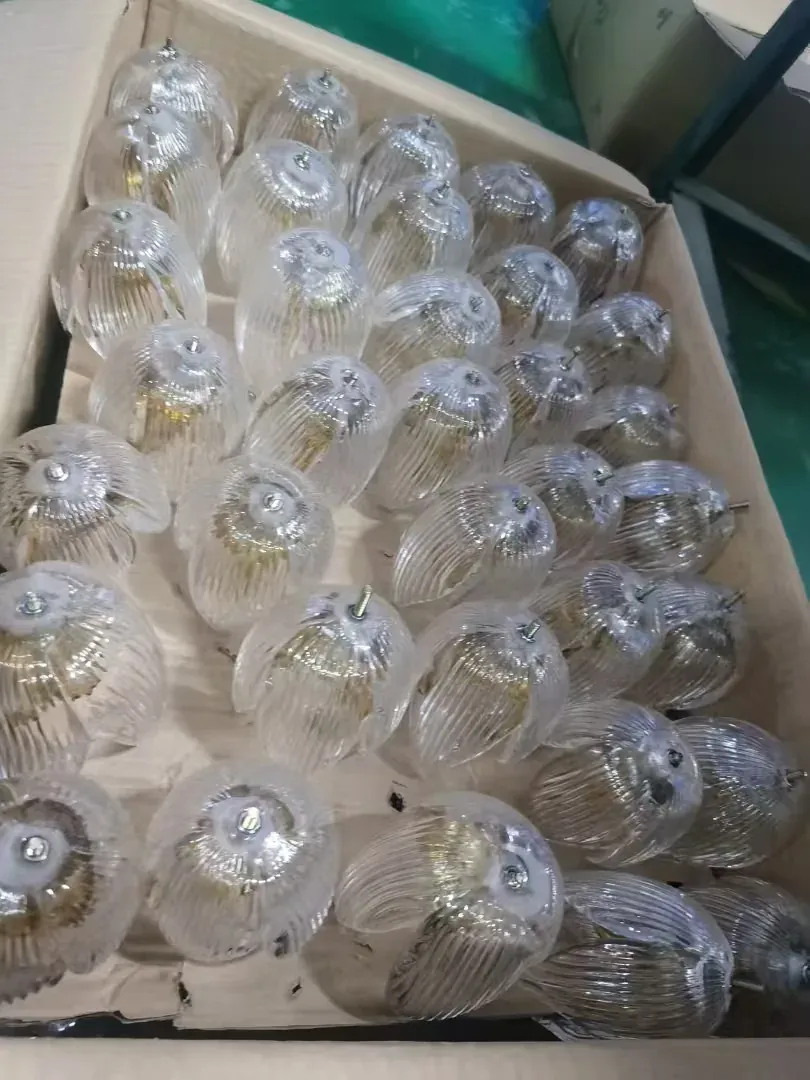
Glass only leaves the bench in the condition it arrived in if the packing is right. Shades are boxed in individual cardboard cells; stems and frames travel in foamed profiles. Crates are packed for international freight, with suspension hardware and installation documents packed alongside the fixture — not in a separate envelope that gets lost.
Before the crate leaves: your photos
Nothing ships unseen. Before dispatch, the finished fixture is photographed — assembled where the size allows, then packed and labelled — and those photos plus a short video are sent to the buyer. The installation pack (suspension plan, fixing specifications, wiring diagrams) travels with the shipment, so the contractor on site is not guessing.
This is also the buyer's last chance to request a correction, and it works in both directions: problems caught at the bench cost a day; problems caught on site cost a return shipment.
What this means for your planning
Production for a custom composition typically takes 35 to 45 days depending on order quantity. The stages above run partly in parallel — metal starts while glass is being blown — but glass and finishing set the pace. The single most effective way to hold that timeline is complete information early: heights, quantities and the destination country, all in the first message.
Send your drawing — we reply with feasibility, a suspension plan and a lead time.